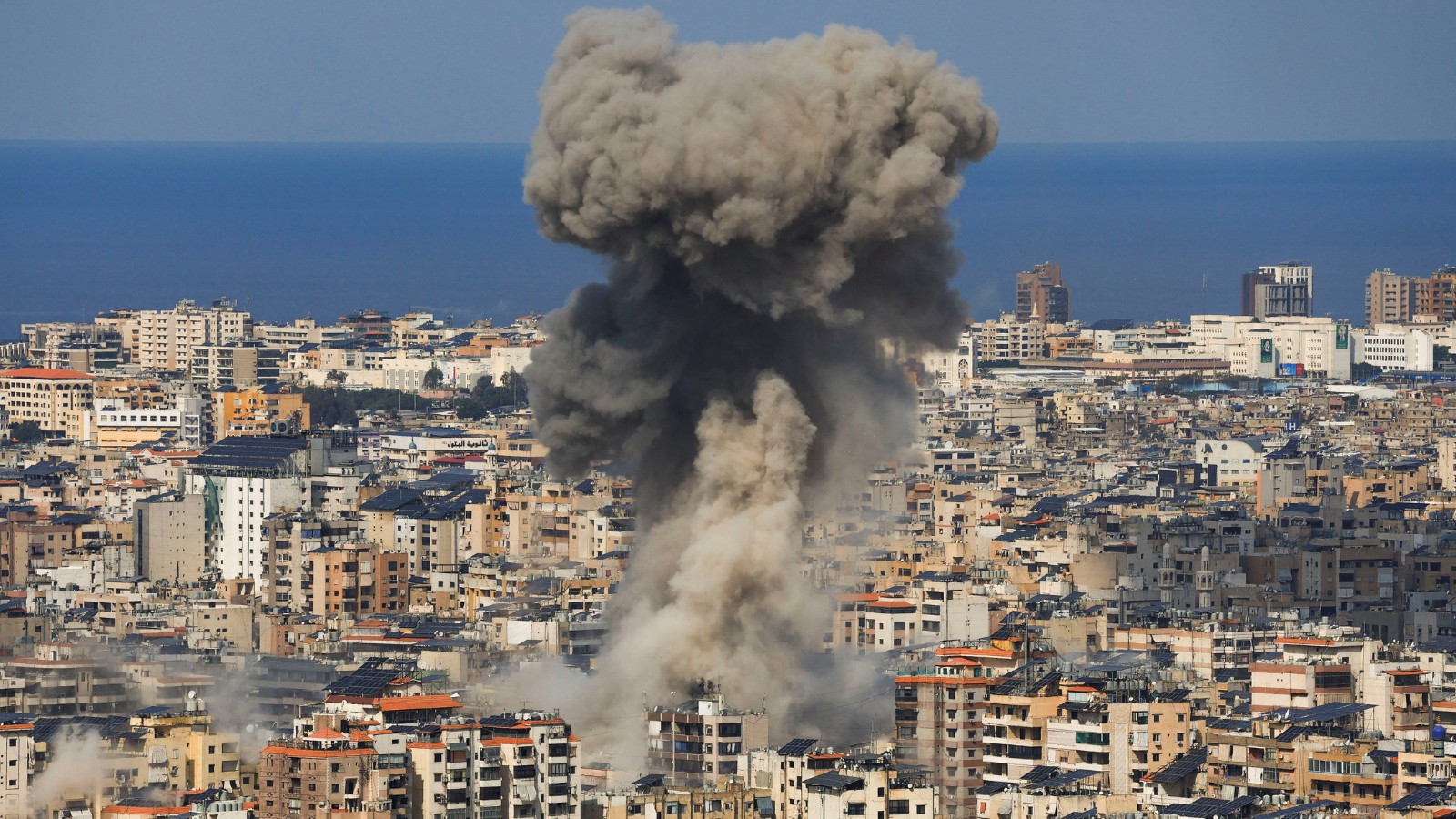
The headlines are predictable. A drone hums over a desert, a Hellfire missile finds its mark, and a high-ranking Iranian operative supposedly orchestrating a plot against a former President is erased from the chessboard. Washington pats itself on the back. The media parrots the "mission accomplished" narrative. Everyone goes home feeling safer.
They shouldn't.
This obsession with "decapitation strikes"—the surgical removal of leadership figures—is a strategic sedative. It makes the public feel like something is being done while the actual threat remains entirely untouched. If you believe killing one man stops a state-sponsored assassination plot, you don't understand how modern proxies or Iranian intelligence actually function. You’re watching a theatrical production of national security instead of the real thing.
The Myth of the Irreplaceable Martyr
The central fallacy of the recent strike on an Iranian leader allegedly tied to the Trump assassination plot is the "Great Man" theory of terrorism. We act as if these operations are the sole brainchild of a single genius. They aren't. They are bureaucratic outputs.
The Islamic Revolutionary Guard Corps (IRGC) and its Quds Force are not a garage startup. They are a massive, institutionalized apparatus with deep benches and redundant systems. When the U.S. killed Qasem Soleimani in 2020, the consensus was that Iran's regional influence would crumble. It didn't. It decentralized.
By killing a specific node in a plot, you aren't deleting the file; you’re just forcing the system to reroute. Institutional knowledge in these organizations is codified. The "martyrdom" of a leader provides a recruiting spike and a political mandate for the successor to prove their worth by doubling down on the original mission. We are trading a known quantity for an unknown, more motivated one.
High-Tech Kinetic Solutions for Low-Tech Human Problems
We have a fetish for kinetic solutions. If we can see it on a thermal feed and blow it up with a $150,000 missile, we think we've won. This is a massive miscalculation of ROI.
The plot to kill a political figure doesn't require a mastermind. It requires a handful of radicalized locals, a few encrypted Telegram chats, and some basic tradecraft. These are "low-signature" threats. You cannot bomb an idea, and you certainly cannot bomb a decentralized network of sleeper cells by hitting a guy in a car in Damascus or Baghdad.
The U.S. intelligence community often falls into the trap of "target fixation." We spend months tracking a single individual, burning through billions in SIGINT (Signals Intelligence) and satellite time, only to realize that the person we killed was merely a facilitator. The real danger is the ideology and the funding stream, neither of which are affected by a localized explosion.
The Blowback of Tactical Success
Every time we celebrate one of these strikes, we ignore the geopolitical bill that comes due. These actions provide Iran with the perfect pretext for escalation while maintaining "plausible deniability" for their own counter-moves.
- Information Warfare Gold: A strike allows Tehran to play the victim on the global stage, distracting from their own internal human rights abuses.
- Hardliner Validation: It guts the moderate factions within the target country. It proves the hardliners right: "The Great Satan only speaks in fire."
- The Innovation Loop: Adversaries learn from every strike. They change their encryption, they move their leadership deeper underground, and they make their next plot harder to detect.
I've watched this cycle for twenty years. We kill the "Number 2" of Al-Qaeda or ISIS every three months. If you’ve killed thirty "Number 2s," you aren't winning; you're just bad at math. The structure remains because the structure is designed to survive the loss of individuals.
What the Intelligence Community Won't Admit
The real work of stopping an assassination plot happens in boring rooms with spreadsheets, not on a drone pilot's screen. It’s about squeezing the financial arteries of the IRGC. It’s about offensive cyber operations that brick their communications before they can even send an order.
But those things don't make for good press releases. A grainy video of a car exploding is easy to sell to the American public. It’s "action." It’s "decisive." It’s also largely irrelevant to the long-term safety of the target.
If the goal is truly to protect U.S. officials, the focus should be on hardening the domestic environment and disrupting the financial networks that pay the bills. If you want to stop a plot, you follow the money, not the man. But following the money is hard. It involves confronting "allies" who launder Iranian cash. It involves complex sanctions that have messy economic side effects.
The False Security of the Kill Chain
We have become addicted to the "kill chain."
- Find: Identify the target.
- Fix: Pinpoint their location.
- Finish: Deploy the ordinance.
This works against a conventional army. It is disastrously narrow against a state-sponsored proxy network. When we "finish" a target, we often create a vacuum that is filled by someone younger, more tech-savvy, and less predictable.
Take the case of Hezbollah. Israel has been assassinating their leaders since the 1980s. Each successive generation of leadership has been more competent, more radicalized, and better equipped than the last. We are essentially running a high-stakes evolution experiment where we kill the weak and leave the strong to reproduce.
The Counter-Intuitive Truth
The most effective way to neutralize the threat of an Iranian-led assassination plot isn't to kill the plotter. It’s to make the plotter irrelevant.
This means a massive shift in how we handle clandestine threats. We need to stop treating these strikes as a solution and start seeing them for what they are: a tactical band-aid on a systemic hemorrhage.
We are currently playing a game of Whac-A-Mole where the mole has a nuclear program and a thousand-year memory. You can't win that game by swinging the hammer harder. You win it by unplugging the machine.
Stop cheering for the drone footage. Start asking why the network behind the man is still fully operational. Until we address the source code of the threat—the institutionalized export of terror by the Iranian state—we are just counting down the days until the next "mastermind" takes his place.
The next time you hear a report about a "successful strike" against a plot leader, don't ask if he’s dead. Ask who’s replacing him tomorrow morning.
Go look at the organizational chart of the Quds Force from ten years ago and compare it to today. The names have changed. The mission hasn't. The capability has grown. The "success" of our kinetic strikes is a fiction maintained by people who need to justify their budgets.
Stop looking at the explosion and start looking at the shadow it leaves behind.