The stopwatch didn’t even have time to feel heavy.
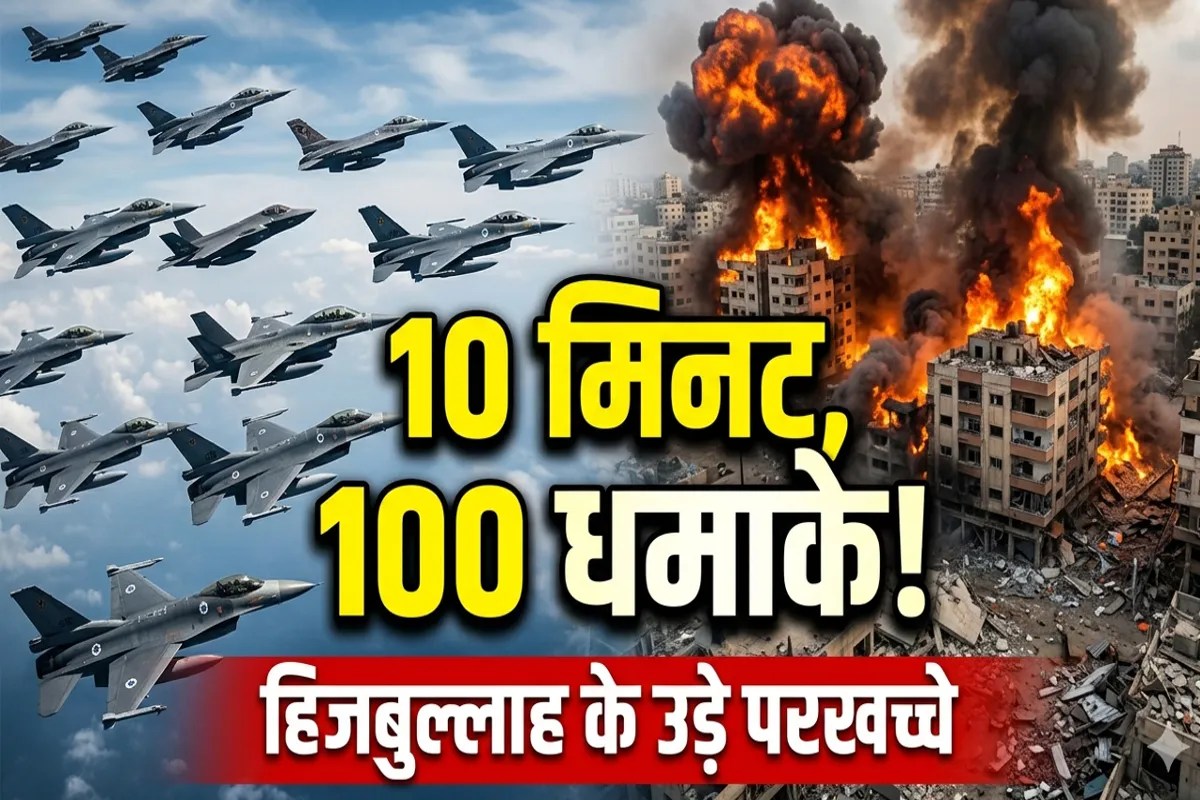
Six hundred seconds. That is the time it takes to brew a slow pot of coffee, to wait for a delayed subway train, or to scroll aimlessly through a social media feed. Yet, in a sliver of a morning that redefined the geography of a conflict, those ten minutes became a digital and kinetic scythe. One hundred command centers. Gone.
The sound wasn't just a series of explosions; it was the acoustic signature of a doctrine being executed at a speed that humans aren't built to process. When the Israeli Air Force launched what is being called its most aggressive surgical strike to date against Hezbollah’s infrastructure, they weren't just dropping steel. They were deleting a network.
Imagine—metaphorically speaking—a nervous system. Hezbollah had spent decades building this one. It wasn't just bunkers and concrete; it was a sophisticated web of fiber optics, encrypted radios, and human couriers designed to act as the brain of a multi-front war. Every "command center" was a node, a place where a commander could look at a screen and decide which valley would erupt next.
Then came the thunder.
The Anatomy of the Blitz
Military analysts often talk about "the fog of war." Usually, it takes hours or days for the smoke to clear enough to see who won the opening hand. Not this time. The sheer density of the strike meant that by the time the first siren stopped wailing in Southern Lebanon, the entire organizational chart of the regional defense had been physically erased.
The complexity of hitting one hundred distinct, hardened targets in ten minutes is a feat of logistics that borders on the impossible. It requires a level of intelligence—satellite imagery, signals interception, and perhaps most crucially, human assets on the ground—that suggests the targets weren't found yesterday. They were mapped, watched, and "owned" long before the first pilot climbed into a cockpit.
Consider the precision required. These weren't carpet bombings. These were needles hitting the eyes of thread. If one jet is off by thirty seconds, the entire synchronized dance falls apart. The targets were nested in villages, tucked under hills, and hidden behind the mundane facade of civilian life. To strike them all at once is to send a message: We see everything you have built, and we can take it away before you can blink.
The Human Cost in the Shadows
Behind every statistic of a "destroyed command center," there is a terrifying reality for those living in the shadow of the conflict. A grandmother in a Lebanese border town doesn't see a "node" being deactivated. She feels the earth heave like a dying animal. She sees the sky turn a bruised purple from the dust of pulverized limestone.
For the people on both sides of this border, the "ten minutes" didn't end when the jets flew home.
In Northern Israel, the residents of towns like Kiryat Shmona live in a state of suspended animation. They are ghost towns, populated by soldiers and the stubborn few who refuse to leave their gardens. For them, this massive strike is a desperate hope for a return to normalcy—a hope that maybe, just maybe, if the command centers are gone, the rockets will stop falling on their children’s playgrounds.
But hope is a brittle thing in the Levant.
The Invisible Stakes of Digital Warfare
We often focus on the fire and the fury, but the real war happened in the airwaves seconds before the bombs hit. Modern conflict is as much about bits and bytes as it is about ballistics.
To hit a hundred targets simultaneously, you have to blind the enemy. You have to jam their sensors, spoof their radars, and ensure that their communication lines are screaming with static. It is a silent, invisible struggle. If the "brain" cannot tell the "arm" to swing, the fight is over before it begins.
This strike was a masterclass in this electronic suppression. Hezbollah, a group that prides itself on being a "ghost" army—elusive, decentralized, and deeply embedded—found itself exposed. It was as if a spotlight had been turned on in a dark room, and every shadow was suddenly a target.
The technical prowess here is staggering. It involves AI-driven target prioritization and real-time data links that allow a pilot to know exactly what the drone five miles ahead is seeing. It is cold. It is efficient. And for those on the receiving end, it is an existential nightmare.
Why the Clock Matters
Speed isn't just a flex; it's a strategic necessity. If you strike ten targets today and ten tomorrow, the enemy adapts. They move their assets. They go deeper into the mountains. They change their codes.
By compressing the destruction of an entire regional infrastructure into ten minutes, the IDF effectively paralyzed the response. There was no time to send a warning. No time to evacuate the high-value equipment. No time to trigger the counter-attacks that usually follow such incursions.
The sheer velocity of the attack created a vacuum. In that vacuum, the political and psychological weight of the strike began to settle. It wasn't just about the buildings; it was about the realization that the "invincible" shield of secrecy had been shattered.
The Weight of the Aftermath
The dust from a hundred collapsed buildings doesn't settle quickly. It lingers in the air, a physical reminder of the shift in the balance of power.
We are no longer in an era of long, drawn-out trench wars where territory is gained inch by bloody inch. We are in the era of the "systemic collapse." This strike was designed to trigger exactly that—a moment where the enemy looks at their radio, finds it dead, looks at their commander, finds him gone, and realizes the ground they are standing on is no longer safe.
Yet, history has a way of reminding us that you cannot bomb an idea into non-existence. You can destroy a command center, but you cannot destroy the grievance that built it. The command centers can be rebuilt. The concrete can be poured again. The wires can be re-strung.
The real question isn't whether one hundred centers were destroyed in ten minutes. The question is what happens in the eleventh minute.
As the sun sets over the Galilee and the hills of Southern Lebanon, the silence is heavier than it was before. It is the silence of a region holding its breath, waiting to see if this massive show of force has bought a lasting peace or merely cleared the stage for a more desperate, more chaotic act.
The jets are back on the tarmac. The sensors are still humming. The stopwatch has been reset. But in the scorched earth where those hundred centers once stood, the smoke continues to rise, a grey finger pointing toward an uncertain sky.