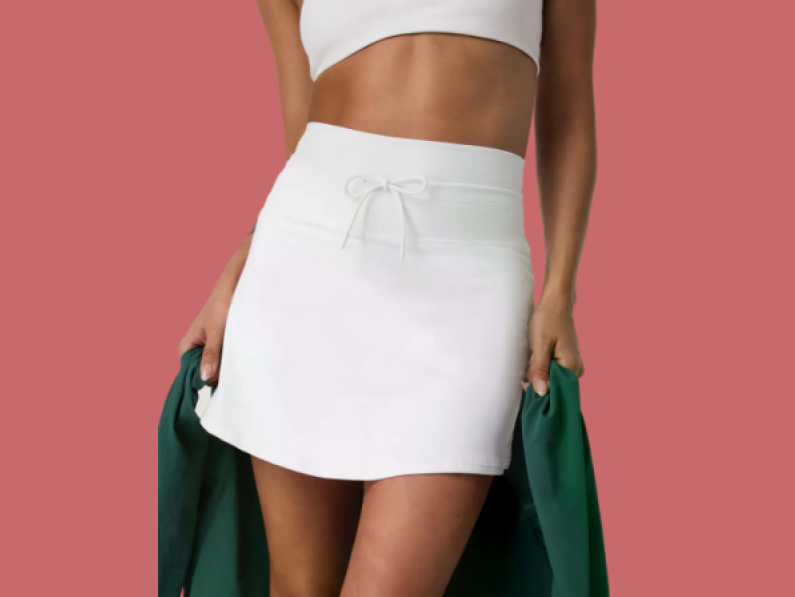
The efficiency of summer activewear is determined by a three-way collision between ambient humidity, metabolic heat production, and the evaporative capacity of specific textile geometries. Most consumer-grade recommendations focus on aesthetics or "breathability"—a term so broadly applied it has lost technical utility. To optimize performance in high-temperature environments, an athlete or high-activity user must evaluate apparel through the lens of moisture transport physics and mechanical friction reduction. Selecting a summer wardrobe requires a transition from trend-based curation to a logic-driven assessment of fiber density, surface area contact, and thermal conductivity.
The Thermodynamics of Moisture Transport
In a high-heat scenario, the primary mechanism of cooling is the evaporation of sweat from the skin. High-performance activewear acts as an extension of this biological process. The effectiveness of a garment rests on its ability to move liquid from the skin to the outer surface of the fabric, where it can interact with airflow. This process, known as wicking, is driven by capillary action.
- Capillary Geometry: Fine-denier fibers create smaller spaces between threads, increasing the capillary pressure that pulls sweat away from the body.
- Surface Area Maximization: Advanced knits utilize "honeycomb" or "dimpled" structures. These increase the external surface area of the garment without increasing its mass, accelerating the rate of evaporation.
- Hydrophilic vs. Hydrophobic Balance: Effective summer gear often utilizes a dual-layer construction. The inner face (against the skin) is hydrophobic to prevent the fabric from feeling "heavy" or "wet," while the outer face is hydrophilic to pull that moisture through the weave and spread it across the surface.
Cotton represents a systemic failure in this framework. Its high absorption capacity means it retains moisture rather than transporting it, leading to a "wet-cling" effect that collapses the air gap between fabric and skin, effectively insulating the body and raising core temperatures.
Structural Engineering of the Summer Silhouette
The physical cut of a garment dictates its aerodynamic and thermal performance. For summer activewear, the choice between compression and loose-fitting silhouettes is not an aesthetic one, but a decision based on the specific type of activity and the prevailing environmental conditions.
The Compression Variable
Compression gear, specifically those utilizing high percentages of elastane or spandex, serves a specific thermal function. By maintaining constant contact with the skin, these garments eliminate the insulating "dead air" layer. However, in high humidity, compression can become a liability if the fabric reaches its saturation point, as it creates a barrier that prevents sweat from evaporating directly off the skin.
The Convection Gap
Loose-fitting activewear relies on the "chimney effect." As the body moves, it creates a mechanical pumping action that forces hot air out through the neck and arm openings, drawing cooler air in from the bottom. This is most effective in dry heat where the primary goal is maximizing airflow over the skin. The trade-off is the increased risk of "chafing" or mechanical skin irritation caused by the fabric moving across the body.
Material Science and Fiber Selection
Synthetics dominate the performance sector, but the rise of "technical naturals" has introduced new variables into the selection matrix.
- Polyester and Nylon Derivatives: These are the baseline for durability and wicking. Modern iterations are often treated with silver ions or other antimicrobial agents to inhibit the growth of odor-causing bacteria which thrive in the warm, moist microclimate between the fabric and the skin.
- Merino Wool (Ultralight): At weights below 150gsm (grams per square meter), merino wool provides a superior strength-to-weight ratio and natural thermoregulation. Unlike synthetics, wool can absorb moisture into its core while the surface remains dry, providing a more consistent "dry feel" during low-to-medium intensity activities.
- Cellulosic Fibers (Lyocell/Tencel): Derived from wood pulp, these fibers are naturally more absorbent than polyester but release moisture faster than cotton. They are often blended with synthetics to provide a "cooling" sensation to the touch, a result of their high thermal conductivity.
The Friction Function and Kinetic Comfort
Summer activity increases the risk of dermatitis and friction-induced injury. As skin becomes hydrated (sweaty), its coefficient of friction increases. The selection of activewear must account for the placement of seams and the texture of the internal face of the fabric.
Flatlock stitching is the industry standard for reducing seam profile, but the logical progression is seamless construction. In seamless garments, the "seams" are actually transitions in the knit density, programmed into the circular knitting machine. This removes the mechanical "ridges" that cause irritation during high-repetition movements like running or cycling.
Furthermore, the "hand-feel" or texture of the fabric dictates its interaction with wet skin. A slightly textured internal face—often referred to as a "grid back"—is preferable to a perfectly smooth one. The texture creates micro-voids of air, preventing the fabric from vacuum-sealing against the skin when saturated.
Environmental Defense and Optical Density
Activewear must function as a radiation shield. The Ultraviolet Protection Factor (UPF) of a garment is not merely a function of chemical coatings, which can wash out over time, but of the density and thickness of the weave itself.
- Color Theory in Performance: While dark colors absorb more thermal energy from the sun, they also absorb more thermal energy from the body. In the presence of a breeze, a loose-fitting dark garment can actually be cooler than a tight-fitting light garment because it facilitates the transfer of body heat to the fabric, which is then stripped away by convection.
- The Mesh Paradox: Incorporating mesh panels in "high-heat zones" (the axilla, the center of the back) increases airflow but decreases UPF protection. Strategic placement is required to ensure that the most vulnerable areas of the skin remain shielded while the areas of highest sweat production are ventilated.
The Utility of Modular Layers
The transition from high-intensity movement to static recovery creates a rapid shift in thermal requirements. Post-activity, the body's sweat response does not instantly cease, but the metabolic heat production drops. This can lead to rapid cooling and discomfort.
Integrating an ultralight, highly packable "wind shell" or a technical "shirting" layer allows for the modulation of the microclimate. These layers are not intended for warmth, but for controlling the rate of evaporation. By partially blocking airflow, the user can prevent "flash cooling," where sweat evaporates too quickly, causing a chilling effect that can lead to muscle cramping or discomfort.
Technical Assessment of Essential Components
A optimized summer kit is built on a hierarchy of needs, starting with the base layer and moving outward.
- The Technical Short: Look for a "split-leg" or "high-stretch" gusseted crotch. The liner should be made of a different, more breathable material than the shell. The shell should have a DWR (Durable Water Repellent) finish, not to keep rain out, but to prevent the fabric from absorbing sweat and becoming heavy.
- The Laser-Cut Top: Perforations in high-heat zones are superior to mesh inserts because they maintain the structural integrity of the main fabric while providing direct-to-skin airflow.
- The Performance Sock: This is the most critical and often overlooked component. A blend of synthetic fibers and merino wool is necessary to manage the extreme moisture levels found inside a shoe. The sock should have "ventilation channels" over the bridge of the foot and compression in the arch to prevent the sock from sliding and causing blisters.
Constraints and Failure Points
No single garment can solve for every environmental variable. High-performance synthetics are susceptible to "stink-retention" over long-term use, as the oils from the skin become trapped in the plastic-based fibers. Similarly, ultralight fabrics, while excellent for heat management, have lower abrasion resistance and will fail if used for activities like rock climbing or weighted rucking.
Users must also recognize that "cooling" claims are often based on the latent heat of evaporation. In environments with 90%+ humidity, evaporation is physically limited by the air's inability to hold more moisture. In these conditions, no fabric will feel "cool"; the goal shifts entirely to managing liquid volume and preventing skin maceration.
Execution Strategy
To build a high-performance summer rotation, ignore marketing terminology like "chill-tech" or "ice-knit" unless the manufacturer provides specific data on the fabric's Qmax (Instantaneous Cool Touch) value.
Prioritize garments that utilize mechanical wicking over chemical treatments. A mechanical wick, created by the structure of the yarn itself, will never wash out. Assess every item by its weight-to-performance ratio: if a shirt feels heavy in the hand, it will feel like a lead weight once it has absorbed 200ml of sweat.
The final decision should be dictated by the "Sweat Mapping" of the individual. If you produce more heat in your core, prioritize highly ventilated tops. If you are prone to lower-body chafing, invest in high-denier, seamless compression liners. The objective is the maintenance of a stable microclimate, regardless of the external thermal load. This is not a matter of style; it is a matter of biological support through advanced material engineering.