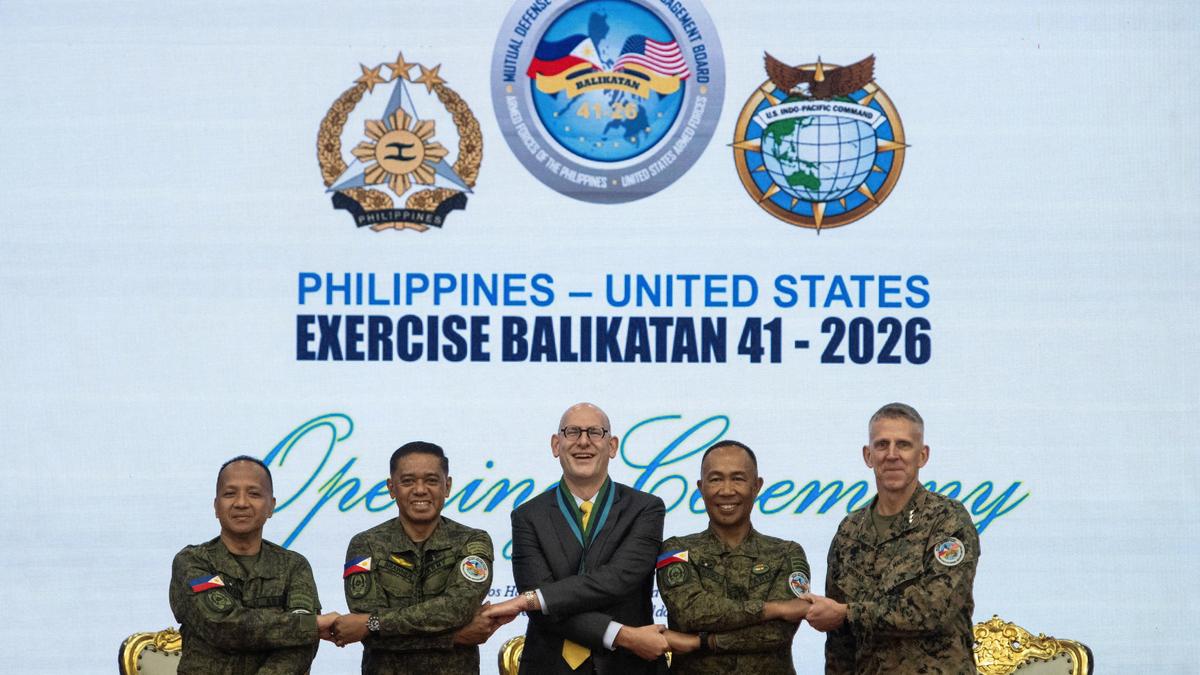
The lazy narrative currently circulating among defense analysts is that the United States is spread too thin. They point to the ongoing combat drills with the Philippines, Balikatan, and then pivot to the Middle East, claiming Washington is juggling too many balls. They argue that preoccupation with Tehran forces a compromise on Pacific security.
They have it backward.
The Pacific theater is not suffering from a lack of attention. It is suffering from a surplus of performative alignment. The obsession with "distraction" serves as a convenient diplomatic mask for a deeper, more structural failure: the United States is not trying to deter conflict; it is merely trying to subsidize a regional status quo that expired years ago.
The Myth Of The Split Focus
The logic of "limited resources" is the oldest excuse in the book for avoiding hard choices. It suggests that if Washington spent less time worrying about the Strait of Hormuz, the South China Sea would become suddenly secure. This is operational illiteracy. The logistical requirements of a carrier strike group in the Persian Gulf are entirely distinct from the maritime security architecture required in the Luzon Strait.
I have watched bureaucrats in the Pentagon play this game for decades. They use the "distraction" framing to justify bureaucratic bloat. If you can convince the taxpayer that the U.S. is fighting on two fronts, you can justify a ballooning defense budget that treats both theaters as equal priorities. In reality, the U.S. military is built to dominate both theaters simultaneously. The constraint is not physical capacity; it is political will.
When Drills Become A Crutch
These combat drills are theater. We spend weeks coordinating amphibious landings and live-fire exercises with Philippine forces to send a signal. Who is the signal for? Beijing reads the signal perfectly, and they are not intimidated. They see a U.S. force that is heavily reliant on rigid, legacy platforms while they continue to invest in asymmetric denial capabilities—missiles, drones, and sensor networks designed specifically to neutralize those legacy platforms.
Imagine a scenario where the U.S. stops holding these massive, high-profile drills for one year. Instead, it quietly triples the supply of anti-ship cruise missiles and intelligence-sharing infrastructure directly to the Philippine military. The current approach prioritizes the photo-op of soldiers standing side-by-side over the harder, less glamorous work of creating a partner capable of independent denial.
We are training partners to work under our umbrella rather than training them to be their own roof. This creates a dependency that effectively anchors U.S. forces in the region indefinitely, which is precisely what the "distraction" narrative seeks to avoid.
The Failure Of Strategic Ambiguity
We need to stop pretending that clarity is a weakness. The prevailing wisdom insists that "strategic ambiguity" regarding the defense of partners keeps adversaries guessing. It is a relic of the Cold War. In a world of hyper-connected information flow and instant surveillance, ambiguity is just another word for hesitation.
Beijing is not guessing. They are observing. They see that our "focus" is tied to a domestic political cycle that changes every four years. They are playing a multi-decade game of attrition, waiting for the inevitable moment when a domestic crisis in the U.S. renders their foreign policy irrelevant.
The most dangerous thing the U.S. can do is continue to treat these engagements as if they are part of a stable, long-term order. They are not. We are in a transition toward a multipolar security environment where U.S. dominance is no longer an inherent default.
Hard Truths For The Pacific Partners
There is a downside to my position. If the U.S. shifts from being the guarantor to being an enabler, our partners in the Pacific will face immediate, localized friction. China will push harder. Some of our "allies" will panic, fearing the loss of the U.S. security blanket. This is a necessary burn.
If a state cannot defend its own sovereignty with the proper technology and tactical training, it is not an ally; it is a liability. By insisting on maintaining the current, expensive, and largely symbolic presence, the U.S. prevents the development of a resilient, distributed security network that could actually stop a power like China.
We are not distracted by Iran. We are distracted by the ghost of our own influence. We are wasting political capital and financial treasure trying to hold back the tide with naval pageantry while ignoring the fact that the actual defense of the region requires abandoning the very command-and-control structures that we have spent fifty years perfecting.
The next time you hear a talking head claim that we are stretched too thin, look at the budget. We are not broke; we are misallocated. We are paying for the comfort of the status quo instead of paying for the grim, high-stakes reality of the next thirty years.
Drop the drills. Cut the ceremony. Hand over the gear and the intelligence, and get out of the way. If the Pacific can be defended, it will be by those who live there, not by a transient superpower that views their territory as a peripheral chessboard. Anything less is just a slow-motion surrender.