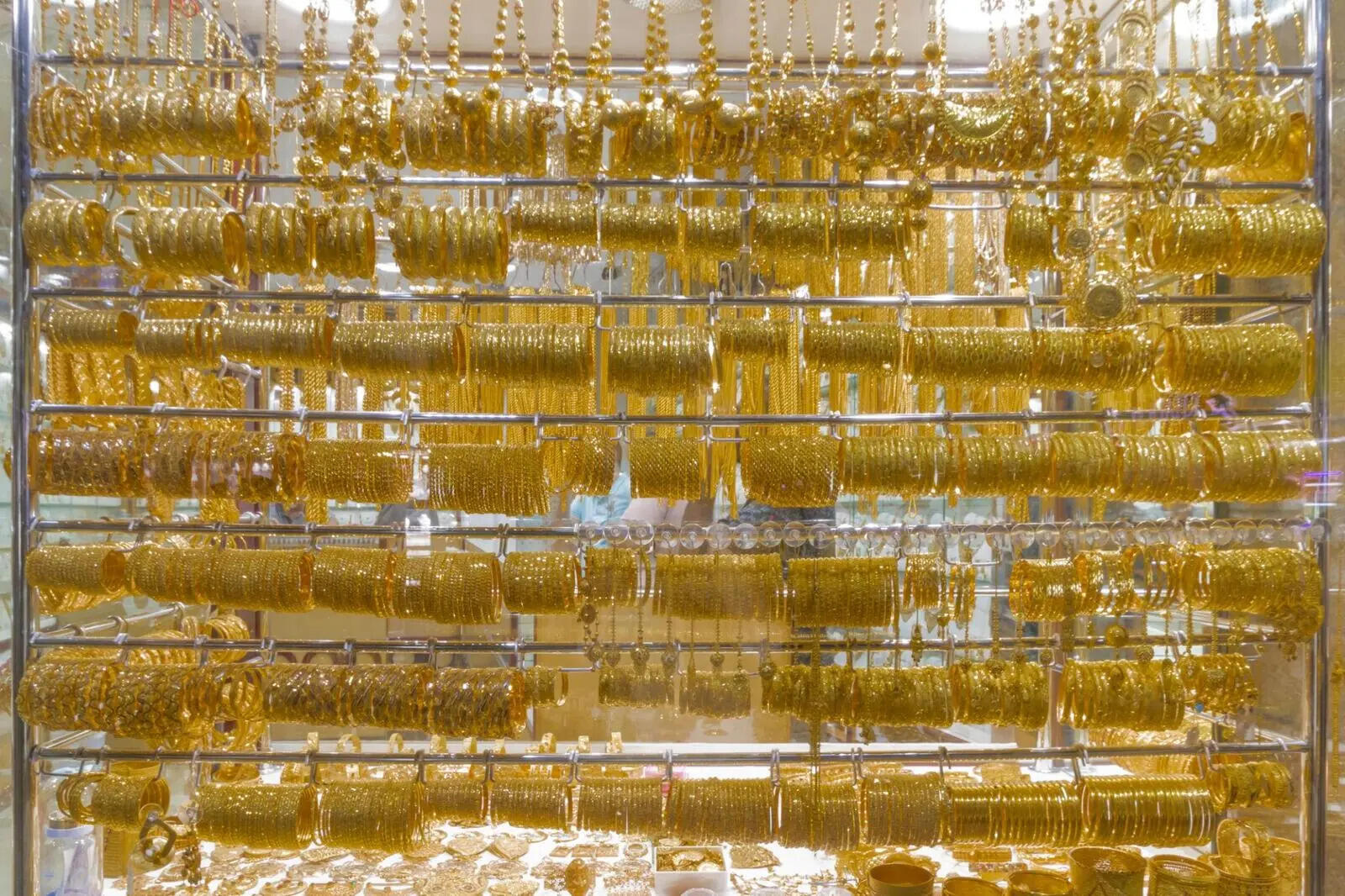
In the cool, filtered air of the Dubai Gold Souk, a man named Omar stands before a window that has held his gaze for thirty years. He isn't looking at the intricate lacework of a bridal necklace or the heavy, almost liquid sheen of a 22-karat cuff. He is looking at a small, digital ticker. It flickers with a number that feels like a heartbeat: Dh624 per gram for 24K gold.
Omar remembers when that number felt like a typo. He remembers when gold was a gift you bought for a niece's wedding without checking your bank balance first. But today, March 27, 2026, the air in the Souk feels different. It’s heavier. People aren't just browsing for beauty anymore; they are buying for survival.
This isn't a story about commodities. It is a story about the collective anxiety of a world that has realized paper money is only as strong as the promises behind it—and those promises are starting to fray.
The Anchor in the Storm
When inflation stops being a headline and starts being the price of your morning coffee, human instinct takes over. We look for something we can touch. Something that doesn't evaporate when a central bank makes a mistake.
Gold is the ultimate physical reality.
The climb to Dh624 per gram in Dubai isn't a random spike. It is a symptom. For months, the global economy has been whispering warnings about rising costs and stagnant wages. In the United States and Europe, inflation figures have refused to settle, sparking a quiet panic that has traveled across oceans to the desert.
Consider a hypothetical young couple, Sarah and Malik. They saved for three years to buy their first home in the hills of Dubai. But as the cost of construction materials soared and interest rates crept upward, their "safe" savings account started to feel like a leaking bucket. Every month they left their money in cash, it bought a little less of the dream they had pictured.
So, they did what millions are doing this week. They traded the digital digits in their bank account for the cold, dense reality of gold bullion. They aren't looking to wear it. They are looking to hide it. To anchor their future to something that has survived every empire, every war, and every economic collapse in human history.
The Psychology of the Ticker
Why Dubai?
The city is often called the City of Gold, but that title is becoming more literal by the hour. Because Dubai maintains a tax-neutral environment for gold investment, it serves as a global thermometer for financial fear. When the price hits Dh624, the world is effectively saying it is scared.
Fear is a powerful motivator, but it’s also a sophisticated one. The buyers today aren't the panicked hoarders of a Hollywood disaster movie. They are calculated. They are watching the Federal Reserve's every move. They are tracking the price of oil. They are noticing that while the 24K rate is grabbing headlines, the 22K and 18K variants—the ones used in jewelry—are also rising in tandem, making the traditional "gold gift" a luxury that requires a strategic plan.
Imagine the artisan in the backroom of a shop in Deira. He works with a metal that has become so precious that even the dust on his floor is swept up with religious fervor. To him, the rise to Dh624 means his margins are thinner. It means the tourists who used to buy three rings now buy one. It means the very nature of his craft is shifting from art to insurance.
The Invisible Stakes
We often talk about gold as a "hedge." That’s a dry, clinical word. Let’s call it what it actually is: a vote of no confidence in the status quo.
When you buy gold at Dh624 per gram, you are betting that the world’s problems aren't going away by next Tuesday. You are betting that inflation is a tiger that hasn't been caged yet. You are acknowledging that the "stable" world we were promised in the early 2000s has been replaced by something much more volatile.
The invisible stake here is the middle class.
The ultra-wealthy have diversified portfolios; they own land, art, and companies. But for the person with a steady job and a modest savings account, gold is the only "elite" asset class that is divisible. You can't buy 1/1000th of a skyscraper, but you can buy a single gram of gold.
On March 27, that gram costs roughly Dh624.
For a delivery driver or a mid-level manager, that is a significant portion of a weekly paycheck. The decision to spend it on a small yellow coin instead of a new gadget or a weekend getaway is a profound shift in behavior. It’s a move from consumption to preservation.
The History Written in Karats
Gold doesn't change. We do.
The metal sitting in the vaults under the city today is chemically identical to the gold the Pharaohs pulled from the earth or the bars the British Empire used to fund its expansion. It is a constant.
What changes is our desperation for it.
In the 1970s, during the last great inflationary era, gold performed a similar dance. It sat quietly for years while the world felt stable, then it exploded when the cracks appeared. We are seeing the echoes of that era today. The difference is the speed of information. In 1975, you had to wait for the morning paper to know you were getting poorer. In 2026, you feel it in real-time on your smartphone screen.
This creates a feedback loop. As the price climbs, more people notice. As more people notice, they buy. As they buy, the price climbs higher.
Dh624 isn't just a price. It’s a signal.
The Quiet Reality of the Souk
Back in the Souk, the sun begins to set, casting long, amber shadows across the cobblestones. The neon signs for "Gold & Diamonds" flicker to life.
There is a woman sitting on a bench near the entrance. She holds a small velvet pouch. She just sold a bracelet she inherited from her grandmother. For her, Dh624 per gram isn't a buying opportunity; it’s a lifeline. The inflation that drove the price up also drove her rent up. The gold is doing exactly what it was meant to do: it held its value until she needed it most.
This is the dual nature of the metal. It is both a shield for the rich and a bridge for the struggling.
As the digital ticker updates again, blinking with the latest fractional movement, the crowd doesn't thin. If anything, it grows. There is a sense of urgency that transcends language. Whether you speak Arabic, English, Hindi, or Mandarin, the language of Dh624 is universal.
It means the world is uncertain. It means the future is expensive. It means that, for now, the only thing we can truly trust is the weight of what we can hold in our hands.
Omar finally turns away from the window. He doesn't buy anything today. He doesn't need to. He simply touches the plain gold band on his left hand—a piece of metal that cost him a fraction of today's price decades ago. He feels the coolness of it against his skin. He knows that no matter what the banks say tomorrow, this small, circular weight isn't going anywhere.
The sun disappears behind the skyscrapers, leaving the gold to glow under the artificial lights, shimmering with the reflected hopes and fears of a city that knows exactly what a gram is worth.
The ticker blinks again. The price holds. The world waits.