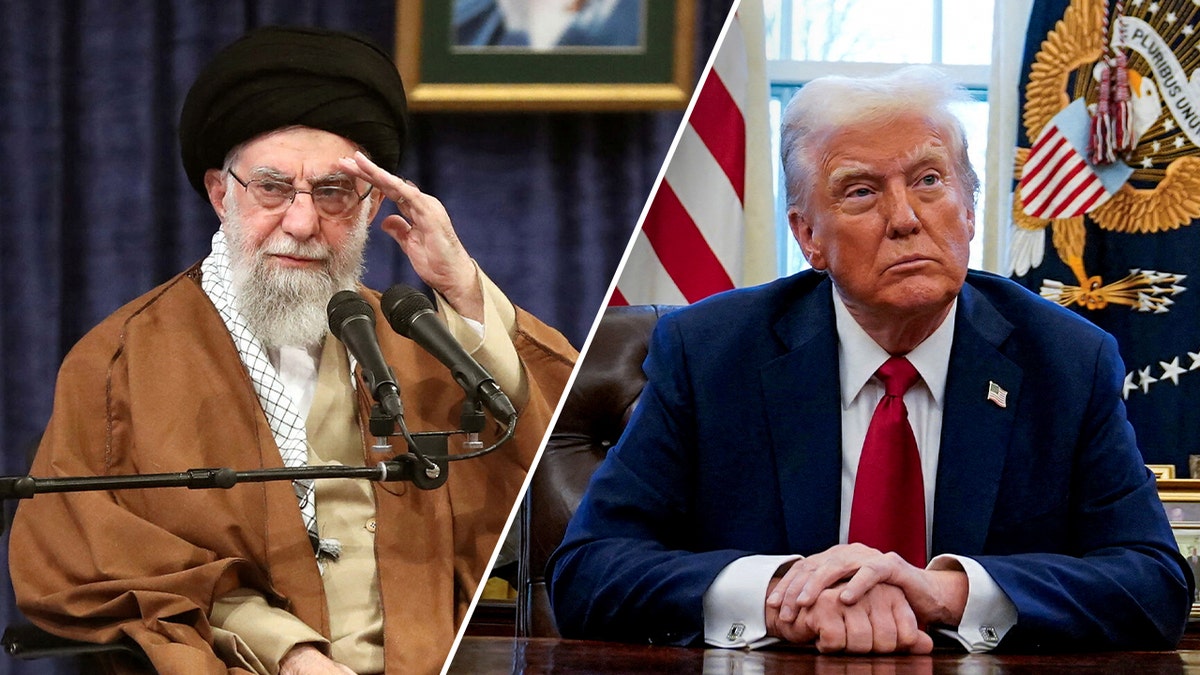
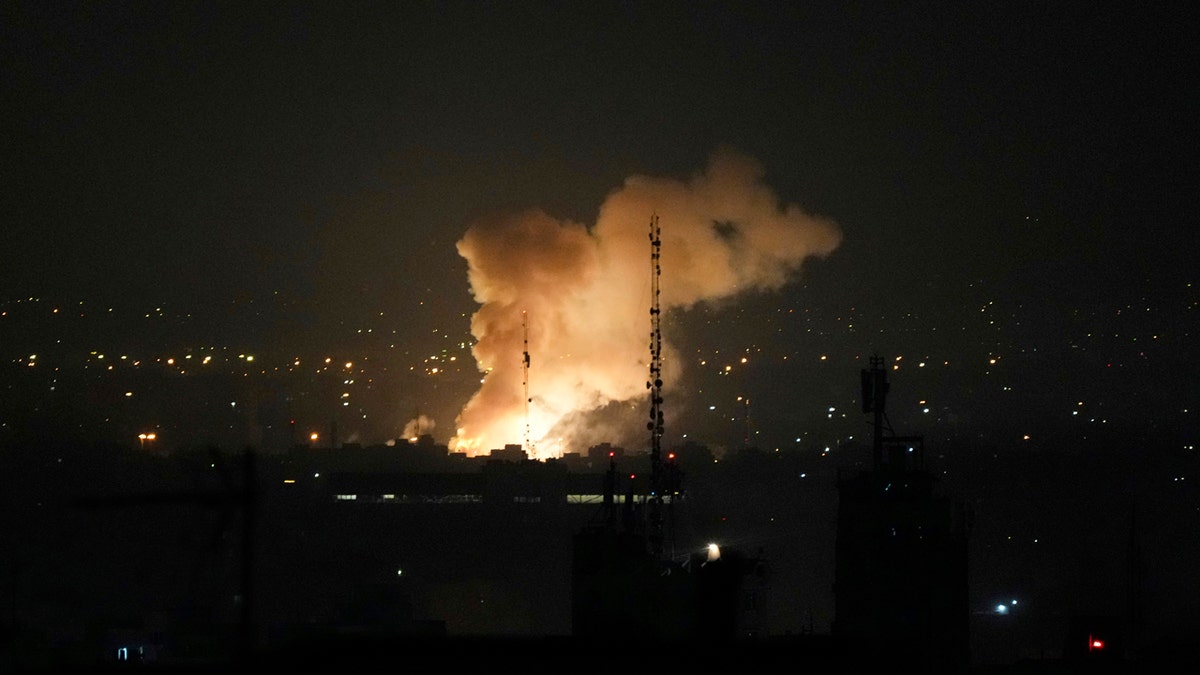
The map of West Asia is glowing red today. It isn't just about one border or one specific grievance anymore. We've reached a point where the friction between pro-Iran factions and regional powers has turned into a multi-front pressure cooker. If you’ve been following the headlines about the drone strike on an Erbil hotel, the interceptions over Saudi soil, or the surgical strikes in Lebanon, you're seeing the fragments of a much larger, uglier picture. This isn't a series of isolated events. It's a synchronized display of force.
People often ask if we're looking at a full-scale regional war. The reality is that the "war" has already shifted. It’s no longer about traditional armies facing off across a trench. It’s about "gray zone" warfare—using drones, proxies, and precision missiles to send messages without triggering a total collapse. But as we saw this week, those messages are getting louder and much more frequent.
The Erbil Attack and the Message to the West
Erbil has long been a focal point for tension in Northern Iraq. When a pro-Iran group targets a hotel in the heart of the city, they aren't just trying to cause property damage. Erbil represents the most stable, pro-Western pocket in a region often defined by chaos. By hitting a civilian-heavy target like a hotel, these groups are telling the United States and its partners that nowhere is off-limits.
I’ve seen this pattern before. These groups use small, low-cost "suicide drones" that are notoriously hard to track on standard radar. They fly low, they’re slow, and they’re cheap. It costs a fraction of the price of a high-end interceptor missile to build one of these drones, which gives the attackers a massive economic advantage. They can fail nine times, but if the tenth drone hits, they win the news cycle.
The political fallout in Baghdad is just as heavy. The Iraqi government is constantly caught in a vice between its security partnership with Washington and the heavy influence of Tehran-backed militias. Every time a drone falls on Erbil, it weakens the central government's claim that it can actually control its own borders.
Saudi Arabia and the Persistent Drone Threat
Further south, the Saudi Arabian defense forces just intercepted another wave of drones. For the Saudis, this is a Tuesday. They’ve spent billions on the Patriot missile system and other high-altitude defenses, but the threat has evolved. The drones being intercepted now are often "loitering munitions." They can hang in the air, wait for a gap in coverage, and then strike.
Why does this matter to you? Because the Red Sea and the Arabian Peninsula are the arteries of global trade. When drones fly over Saudi airspace, insurance premiums for oil tankers spike. Global supply chains, already fragile, take another hit. It’s a reminder that a local conflict in West Asia can end up making your gas bill or your Amazon delivery more expensive in a matter of days.
Saudi Arabia’s ability to knock these threats out of the sky is impressive, but it’s an expensive game of Whac-A-Mole. You can’t keep firing million-dollar interceptors at fifty-thousand-dollar drones forever. The math just doesn’t work out in the long run.
Israel and Hezbollah The High Stakes Game in Lebanon
While drones are buzzing in the Gulf and Iraq, the situation on the Lebanon-Israel border remains the most volatile flashpoint of all. Israel’s recent strikes against Hezbollah targets aren't just retaliatory. They’re preemptive.
Hezbollah isn't some ragtag militia. They’re a disciplined, heavily armed force with an arsenal of over 150,000 rockets. When Israel strikes their positions in Southern Lebanon, they’re trying to degrade that capability before it can be used. But there’s a catch. Every strike risks a miscalculation. One hit that goes too far, or one civilian casualty too many, and the "rules of the game" that have kept a shaky peace since 2006 could evaporate.
The northern border is a ghost town right now. Tens of thousands of civilians on both sides have been displaced. You have a situation where neither side technically wants a full war, yet both are sprinting toward the edge of the cliff. It's a classic security dilemma. If Israel doesn't strike, Hezbollah gets stronger. If Israel does strike, the risk of a massive rocket barrage on Tel Aviv grows.
The Drone Proliferation Problem
We need to talk about why drones have changed everything. Ten years ago, if you wanted to strike a target hundreds of miles away, you needed an air force. You needed pilots, fuel tankers, and massive infrastructure. Today, you just need a laptop and a shipping container.
- Accessibility: These drones are often assembled from "dual-use" parts—commercial GPS units and small engines you can buy online.
- Deniability: It’s hard to definitively prove who pulled the trigger when a drone is launched from a remote desert.
- Saturation: Launching twenty drones at once can overwhelm even the best defense systems.
What Most People Get Wrong About This Conflict
A common mistake is thinking this is all about religion or ancient grudges. It’s not. It’s about modern power politics and regional hegemony. Iran wants the U.S. out of the region. The U.S. and its allies want to maintain the status quo. The proxies—whether in Iraq, Yemen, or Lebanon—are the tools used to shift that balance without starting World War III.
Another misconception is that these attacks are random. They aren't. They almost always coincide with diplomatic shifts. If there’s a talk about sanctions, the drones fly. If there’s a move toward a new trade deal, a hotel gets hit. It’s "kinetic diplomacy." It’s brutal, but it’s calculated.
How to Track These Events Like a Pro
If you want to stay ahead of the curve, don’t just watch the big news networks. They’re usually twelve hours behind the reality on the ground. You have to look at the "OSINT" (Open Source Intelligence) community. These are researchers who track flight paths, satellite imagery, and localized social media feeds to see what’s actually happening in real-time.
Look for patterns in "Notices to Airmen" (NOTAMs) over the Gulf. Watch the shipping lanes in the Bab al-Mandab strait. When you see a sudden cluster of drone activity in Iraq, expect a response in Lebanon or Syria within forty-eight hours. The escalation follows a rhythm.
The Real Impact on Global Stability
This isn't just a "them" problem. The instability in West Asia creates a ripple effect that touches everything from the price of grain to the stability of European borders. When conflicts intensify, people move. Refugee crises aren't just humanitarian issues; they're massive political engines that reshape elections in the West.
The interception of drones in Saudi Arabia and the strikes in Lebanon tell us that the "deterrence" that held for the last decade is failing. The red lines have been moved so many times they’re basically pink now. We’re in a period where everyone is testing everyone else’s limits.
Practical Steps for the Informed Observer
You don't have to be a defense analyst to understand the risks. Start by diversifying your news sources. If you're only reading Western outlets, you're getting half the story. If you're only reading state-aligned media from the region, you're getting a fairy tale.
Watch the price of Brent Crude oil. It’s the most honest indicator of how dangerous the world thinks West Asia is on any given day. If the price jumps $5 in an afternoon, something happened that the news hasn't caught up to yet.
Stay skeptical of "official" casualty counts or "mission accomplished" statements from any side. In this kind of warfare, the first casualty is always the truth. The groups attacking the Erbil hotel will claim they hit a "Mossad base." The defenders will claim they intercepted "all" the drones. The truth is usually somewhere in the middle, buried under the rubble.
Pay attention to the hardware. When you see new types of drones appearing in these attacks, it means the supply lines are open and evolving. That’s a sign that the conflict isn't winding down; it’s getting an upgrade. The tech is moving faster than the diplomacy can keep up.
The smartest move right now is to keep a close eye on the diplomatic backchannels. While the drones are flying, there are still people talking in neutral capitals like Muscat or Doha. Those quiet conversations are the only things standing between the current "intensification" and a total regional firestorm. Watch what happens there, and you'll know where this is actually going.