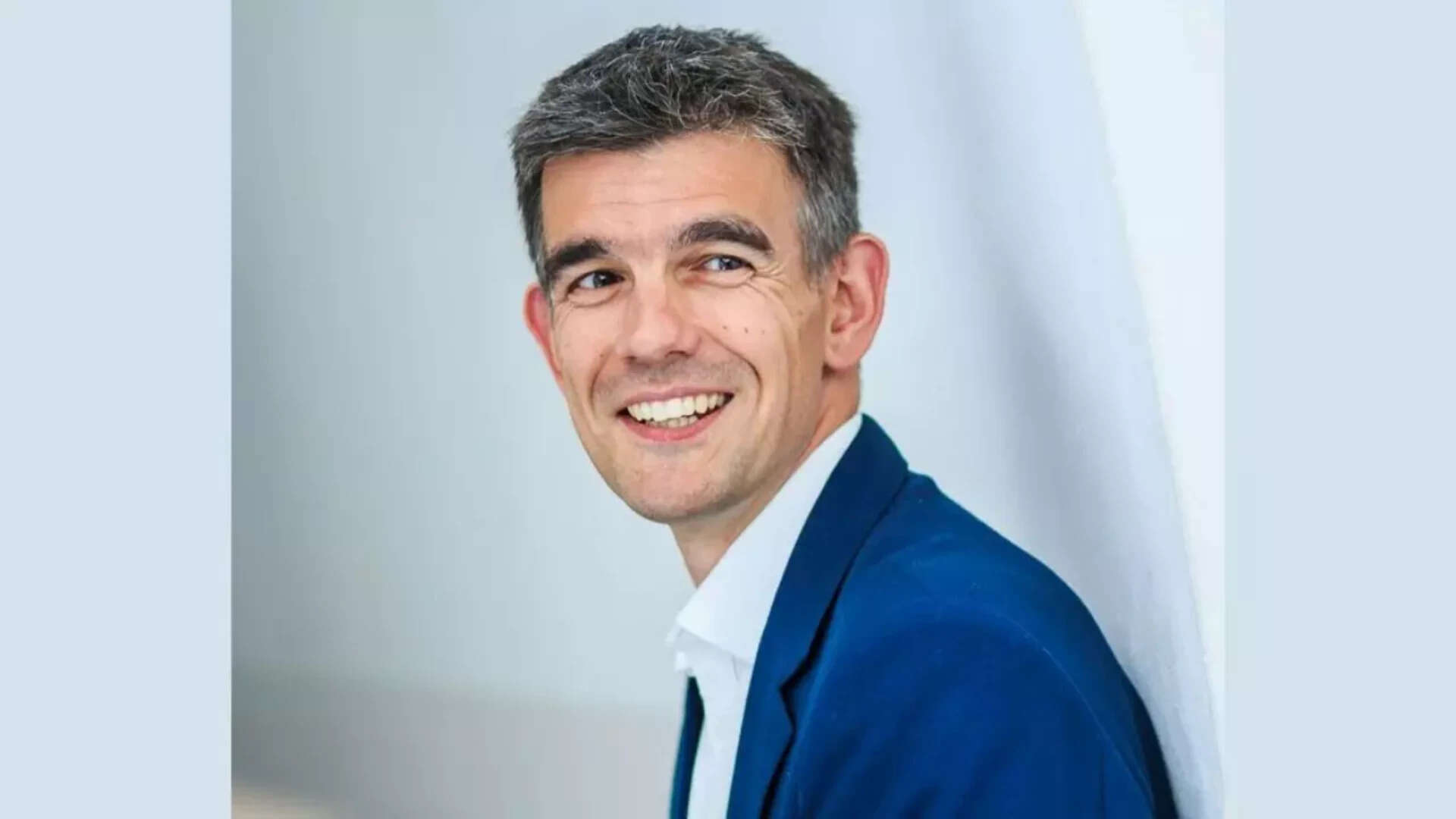
The internet has a way of making people feel omnipresent and invisible at the same time. We know their products, we live inside their interfaces, and we fuel their bank accounts, yet we wouldn't recognize the person behind the curtain if we bumped into them at a coffee shop. Leonid Radvinsky was the ultimate version of this digital ghost. He was the man who owned the keys to the most controversial, lucrative, and culturally disruptive kingdom of the last decade: OnlyFans.
Now, he is gone.
He was 43. In the prime of his financial life, sitting on a mountain of wealth that most people cannot even begin to visualize, the owner of a platform that turned the creator economy on its head has died. The news didn't come with the fanfare of a tech mogul’s passing. There was no livestreamed memorial, no Silicon Valley vigil. Just a statement. A cold, corporate acknowledgement that the man who built the infrastructure for modern digital intimacy has left the building.
Consider the weight of that silence. Radvinsky was a ghost even when he was alive. He wasn't the face of the company; the creators were. The thousands of men and women who look into their phone cameras and sell a piece of their lives were the front-facing soldiers of his empire. He was the architect. He built the rooms where they worked, took his 20 percent cut of every transaction, and stayed remarkably, almost unnervingly, quiet.
The story of OnlyFans is often told through the lens of moral panic or financial triumph. We talk about the "pornification" of the internet or the "empowerment" of independent creators. We rarely talk about the person who sat at the center of the web, quietly counting the billions. Radvinsky’s death forces us to look at that center. It makes us ask what happens to a digital gold mine when the miner-in-chief vanishes.
His journey wasn't a standard rags-to-riches tale. It was a navigation of the internet’s darkest and most profitable corners. Before he bought OnlyFans from its founders, the Stokely family, Radvinsky was a veteran of the adult industry and the world of domain names. He understood a fundamental truth that many tech CEOs ignore: people will pay for access. Not just for content, but for the feeling of direct, unmediated connection, even if that connection is mediated by a paywall.
The Invisible Empire
To understand the stakes of his passing, you have to look at the numbers, though numbers are often too dry to capture the reality. OnlyFans isn't just a website; it’s an economy. In the last few years, the platform has paid out billions to creators. It has more users than many sovereign nations have citizens. And Radvinsky owned almost all of it.
Imagine a single individual holding the rights to the digital marketplace where millions of people's livelihoods are stored. It’s like owning the only bridge into a city where everyone works. If the bridge owner disappears, the people in the city start to look at the supports. They start to wonder if the tolls will change, or if the bridge will hold under the weight of new management.
The company's statement was brief. It spoke of his vision and his impact. It was the kind of language used to smooth over the jagged edges of a sudden loss. But for the creators—the people who actually generate the value—the stakes are deeply personal. They aren't worried about a CEO’s legacy; they are worried about their next payout. They are worried about whether the next owner will have the same appetite for risk that Radvinsky did.
Radvinsky was willing to take the heat. He stayed in the shadows while the platform faced scrutiny from banks, regulators, and moral crusaders. When Mastercard and Visa tried to squeeze the platform’s lifeblood by threatening to cut off payment processing, Radvinsky didn't blink for long. He knew the power of his platform’s scale. He knew that in the digital age, attention is the only true currency, and he had more of it than almost anyone else in the world.
The Man Who Knew Too Much
There is a specific kind of loneliness in being the owner of a platform like OnlyFans. You are the king of a world that many people find distasteful, yet everyone uses. You are a billionaire who can't exactly go on a press tour to brag about your business model without being grilled by a moralizing media.
Radvinsky’s life was a masterclass in privacy. He lived in Florida, far from the prying eyes of the tech tabloids. He donated to charity, specifically to causes involving the Ukrainian diaspora and tech education. He was a person, not just a headline. He had hobbies, fears, and a family. Yet, to the public, he was a symbol. He was the embodiment of the "new money" that came from the digitization of desire.
But death is a great equalizer. It doesn't care about your privacy settings or your encrypted bank accounts. At 43, his departure feels like a glitch in the system. It’s a reminder that even the people who build the machines are made of fragile, organic matter.
Think about the hypothetical creator—let’s call her Sarah. Sarah pays her mortgage through OnlyFans. She has spent three years building a community, answering messages, and curating her digital persona. For her, Radvinsky wasn't a name she thought about daily. He was the environment. He was the air she breathed in her professional life. Now, the person who guaranteed that air remains breathable is gone. The uncertainty is the real tragedy for those left behind in the empire.
The Quiet Succession
What happens when a man who owned nearly 100 percent of a company like this passes away? The legal ramifications are a nightmare of trusts, estates, and corporate bylaws. But the human ramifications are even more complex. The company has to find a way to project stability while mourning a man who was, for all intents and purposes, the company itself.
The news of his death is a mirror. It reflects our own complicated relationship with the internet. We are obsessed with the "what" and the "how," but we rarely care about the "who" until they are gone. We consume the content, we argue about the ethics, and we ignore the human being who signed the checks and made the calls.
Radvinsky’s legacy is a complicated one. He will be remembered as the man who democratized the adult industry, taking the power away from the old-school studio moguls and giving it to the individual. He will also be remembered as a man who profited immensely from a world that is often exploitative and fraught with danger. He was both a liberator and a landlord.
There is a hollow feeling in the tech world today. It’s not necessarily grief—most people didn't know him well enough for that. It’s a sense of profound disorientation. The internet feels a little more fragile when one of its major pillars, however hidden, suddenly crumbles.
The screen stays lit. The notifications keep coming. The creators keep posting. The machine that Leonid Radvinsky built is still running, humming along on servers located in nondescript buildings around the globe. But the silence from the top is deafening. It’s the silence of a man who spent his life in the background finally becoming part of the scenery.
He was the ghost in the machine. Now, the machine must learn to run without its ghost.
The pixels don't stop moving, but the story has changed. We are no longer looking at a growing empire; we are looking at an inheritance. We are looking at a future that is no longer guided by a single, quiet hand. The man who owned the internet's most private rooms has left them for the last time, leaving the rest of us to wonder who will be the next to pick up the keys.
The light on the modem blinks. A message is sent. Somewhere, a creator hits "upload." The world moves on, but the shadow of the man who made it all possible has grown long and cold across the digital landscape.