Prime Minister Anwar Ibrahim is currently trapped between a fiscal rock and a geopolitical hard place. The recent decision to tighten fuel subsidy quotas and accelerate the shift toward targeted assistance is not merely a domestic policy tweak; it is a defensive maneuver against a volatile Middle Eastern corridor that threatens to blow a hole in the Malaysian national budget. As tensions involving Iran fluctuate, the global oil market has become a minefield for any nation that still writes a blank check for its citizens' fuel consumption. Malaysia can no longer afford to be that nation.
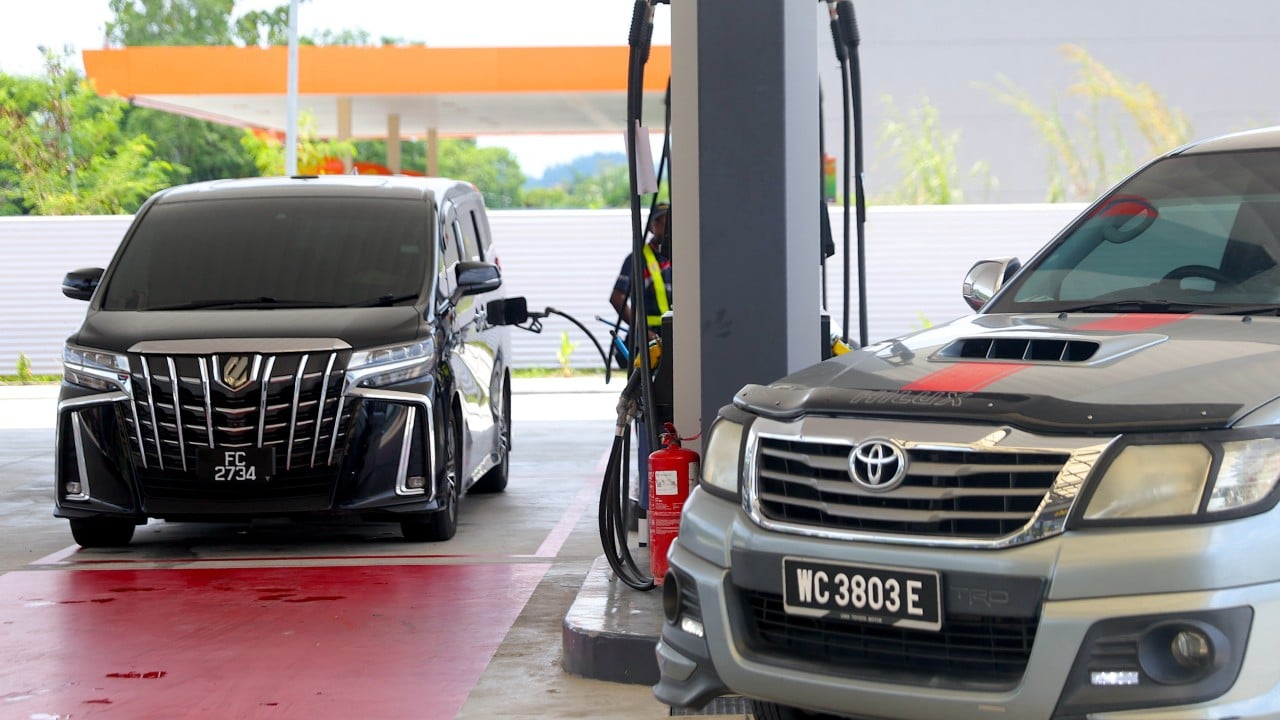
The core of the issue lies in the sheer scale of the leakage. For decades, Malaysia’s blanket subsidies meant that everyone from a billionaire in a luxury SUV to a touring foreigner benefited from the same artificially low prices. When regional instability in the Gulf drives Brent crude upward, the Malaysian government’s bill expands exponentially. By cutting the subsidy quota and moving toward a tiered, "targeted" system, Anwar is attempting to decouple the country’s internal stability from external shocks. However, this decoupling comes with a heavy price for the domestic supply chain, which has spent thirty years built on the foundation of cheap energy.
The Geopolitical Trigger
While many see subsidy reform as a purely local economic matter, the timing is dictated by the Persian Gulf. Iran remains a wildcard in the global energy trade, and Malaysia’s historical and economic ties to the region make it particularly sensitive to fluctuations there. When supply chains in the Strait of Hormuz face even the threat of disruption, the price of crude spikes. For a country like Malaysia, which subsidizes the difference between the market price and the pump price, a $10 jump in crude isn't just a statistic—it is a multi-billion ringgit drain on the Treasury.
Anwar’s administration has realized that waiting for a "calm" moment in global politics to reform subsidies is a fool’s errand. The volatility is the new permanent state. By slashing quotas now, the government is essentially building a firewall. They are betting that the short-term pain of higher logistics costs is better than a total fiscal collapse triggered by a sudden war-driven oil spike that the government cannot cover.
Fragility in the Logistics Network
The supply chain is where the math gets ugly. Most Malaysian hauliers and logistics providers have operated on razor-thin margins for years, often relying on the "subsidized diesel" cushion to remain competitive. The reduction in quotas means these companies are now facing an immediate increase in operational overhead. Unlike a software company that can absorb small costs, a trucking firm’s primary input is fuel.
When the quota is hit, the price jumps to market rates. This creates a "shadow inflation" that doesn't always show up in official consumer price indexes immediately but creates a massive bottleneck at the warehouse level. We are seeing a ripple effect where manufacturers are forced to decide between eating the cost or passing it to a consumer who is already struggling with the rising cost of living. The reality is that the "targeted" nature of the subsidy is often lost in the complexity of the supply chain. If the truck carrying the vegetables isn't fully covered by the subsidy, the vegetables get more expensive regardless of whether the person buying them receives a government handout.
The Smuggling Drain
An overlooked factor in the quota tightening is the rampant cross-border smuggling. For years, Malaysia’s cheap fuel has been siphoned off into neighboring countries where prices are significantly higher. This isn't just small-time opportunism; it is an organized industrial-scale theft of national resources.
- Fuel tankers with modified bellies cross northern borders daily.
- Industrial players buy "subsidized" fuel meant for fishermen or small businesses.
- High-volume stations near borders report anomalies that defy local population statistics.
By tightening the quota and moving to the FLEET card system, the government is trying to digitize the audit trail. They want to know exactly where every drop of subsidized diesel goes. It is a desperate attempt to stop the bleeding of taxpayer money into the pockets of regional syndicates.
The Manufacturing Squeeze
Manufacturers in the Klang Valley and Penang are feeling a different kind of pressure. While the government promises that "essential" industries will remain protected, the definition of essential is becoming narrower. Mid-sized factories that aren't classified under high-priority categories are seeing their energy costs climb. This is particularly dangerous for Malaysia’s electronics and semiconductor sectors, which compete on a global stage where every cent of production cost matters.
If Malaysia loses its "low-cost energy" advantage, it must replace it with high-efficiency infrastructure or superior talent. Currently, the transition is lagging. The infrastructure is still catching up to the demands of a high-tech economy, and the talent pool is facing a brain drain to Singapore and the Middle East. Anwar is effectively removing a crutch before the patient has fully learned to walk without it.
Credit and Cash Flow Crisis
The most immediate "how" behind the supply chain bite is credit. Small and medium enterprises (SMEs) in Malaysia often operate on 60-day or 90-day credit terms. When fuel prices rise due to quota cuts, their immediate cash outflow increases. However, their revenue from those deliveries won't hit their bank accounts for months.
This creates a massive cash flow gap. Banks are increasingly hesitant to lend to transport firms with thinning margins, leading to a situation where companies may have the demand but lack the liquidity to put trucks on the road. It is a silent killer of economic momentum. We are seeing reports of smaller players simply closing shop, unable to bridge the gap between the old subsidized reality and the new market-driven one.
The Political Gamble
Anwar Ibrahim is doing what his predecessors feared to do. He is touching the "third rail" of Malaysian politics. The risk is that he loses the middle class—the group that doesn't qualify for targeted aid but isn't wealthy enough to ignore the rising cost of services and goods.
The administration’s argument is that the billions saved from subsidies will be reinvested into healthcare and education. It is a noble premise, but the "reinvestment" side of the equation is invisible to a man paying 30% more for his grocery delivery today. The success of this move depends entirely on the government's ability to prove that the "leaked" money is actually reaching the people. If the savings are swallowed by bureaucratic overhead or new debt servicing, the political backlash will be terminal.
Efficiency as the Only Exit
The industry is now forced into a corner where efficiency is no longer a choice but a survival mechanism. Companies are finally looking at route optimization, fleet electrification, and fuel-efficient driving behaviors that were ignored when diesel was effectively "free."
- Route Optimization: Using AI-driven logistics to ensure trucks never run empty.
- Asset Sharing: Smaller firms pooling resources to maximize fuel quotas.
- Energy Audits: Factories identifying heat loss and mechanical drag in real-time.
This forced modernization might be the silver lining. A subsidized economy is a lazy economy; it doesn't innovate because it doesn't have to. By removing the safety net, Malaysia is forcing its industrial sector to compete on actual merit rather than artificial advantages. It is a brutal, high-stakes transition that will leave many casualties in its wake.
The era of cheap, unquestioned energy in Southeast Asia is ending. Governments across the region are watching Malaysia’s experiment with a mix of fear and curiosity. If Anwar can stabilize the currency and the budget without triggering a total cost-of-living revolt, he will have set a new blueprint for emerging markets. If he fails, he provides a cautionary tale of what happens when a nation tries to fix its foundation while the house is already shaking from global tremors. The data suggests there is no other way forward, but the data rarely accounts for the human cost of a transport sector pushed to the brink.
Stop looking for a return to the old pricing models. They are gone. The supply chain must adapt to a world where fuel is a premium commodity, or it will simply cease to function in its current form.