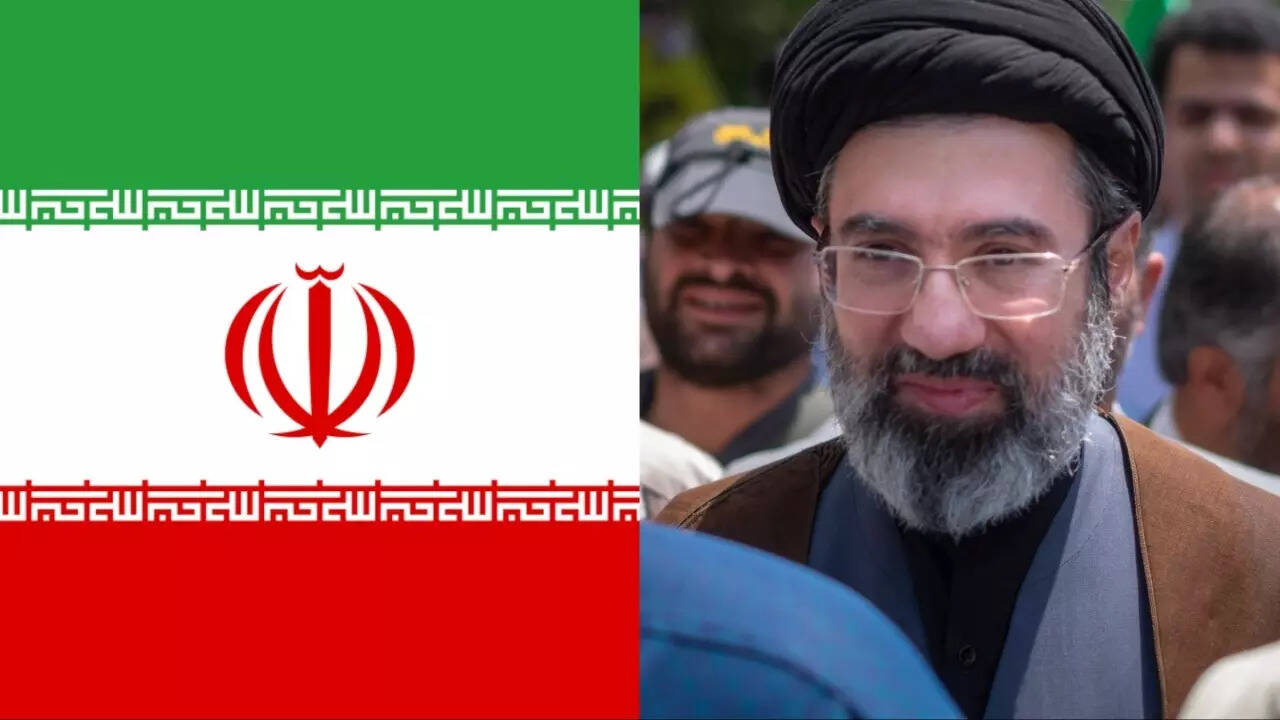
The Western media is obsessed with the "Crown Prince" narrative. It's a lazy, low-effort trope that treats the Islamic Republic of Iran like a medieval European monarchy. Every headline screaming about Mojtaba Khamenei’s "inevitable" rise to the position of Supreme Leader misses the fundamental mechanics of how power actually functions in Tehran.
If you think Mojtaba is a shoo-in just because he shares a last name with Ali Khamenei, you don't understand the Clerical Establishment or the Islamic Revolutionary Guard Corps (IRGC). You are looking at a complex, fractured autocracy through the lens of a Disney movie.
The truth is far more clinical: The prospect of a Mojtaba succession is the single greatest threat to the stability of the regime’s power brokers. They don’t want a King. They want a Manager.
The Heredity Trap
The most frequent argument for Mojtaba’s rise is his proximity to the levers of shadow power. He manages the Beit-e Rahbari (the Office of the Supreme Leader). He controls the gatekeepers. He whispers to the generals.
But here is the nuance the "analysts" miss: In the 1979 Revolution, the central ideological pillar was the rejection of hereditary rule. The Pahlavi dynasty was ousted specifically to end the "Sultanate" model. For the Assembly of Experts—the body officially charged with electing the next Leader—to hand the keys to the son would be an admission of ideological bankruptcy. It would signal that the Republic has become the very thing it swore to destroy.
I have spent years tracking the movements of the Bonyads (charitable trusts) and the IRGC’s commercial wings. These entities are not loyal to a bloodline. They are loyal to their balance sheets. A hereditary succession triggers a legitimacy crisis that the Iranian street will use as a bayonet. The "Deep State" knows this. They are many things, but they are not suicidal.
The Clerical Glass Ceiling
Let’s talk about the Marja'iyya. To be the Supreme Leader, you need more than just a security clearance; you need religious credentials that hold water in Qom.
Mojtaba has spent years trying to fast-track his way to the rank of Ayatollah. He has been teaching high-level jurisprudence classes, trying to build a base of students who will vouch for his scholarly weight. But the senior clerics in Qom see right through it. To them, he is a political operative in a turban.
The Assembly of Experts is comprised of old men who have spent eighty years climbing the clerical ladder. Do you honestly think they are eager to bow to a man whose primary qualification is his DNA? In the history of the Shia clergy, seniority is everything. Promoting a "young" (by their standards) Mojtaba over more seasoned clerics like Alireza A'rafi or even the more pragmatic players would create a schism in the religious heart of the country.
The IRGC’s Real Playbook
The Revolutionary Guard is often cited as Mojtaba’s biggest backer. This is a misunderstanding of how the IRGC interacts with the Leader.
The IRGC wants a Leader who is:
- Weak enough to need their protection.
- Strong enough to maintain the status quo.
- Ideologically predictable.
A Khamenei dynasty creates a concentrated center of power. If Mojtaba takes over, he inherits his father’s personal networks, his father’s prestige, and his father’s specific control over the intelligence apparatus. The IRGC prefers a "consensus candidate"—someone like a mid-level cleric who owes his entire career to the Guard's support.
Think of it as a corporate board of directors. The board (IRGC) doesn't want the founder's son to take over and start firing people. They want a puppet CEO who will keep the dividends flowing to the military-industrial complex.
The Ghost of Ebrahim Raisi
The death of Ebrahim Raisi in a helicopter crash wasn't just a freak accident; it was a stress test for the succession plan. Raisi was the perfect front-man. He was a loyalist, he had the judicial "tough guy" credentials, and most importantly, he wasn't a Khamenei.
With Raisi gone, the spotlight hit Mojtaba by default. This is the worst possible place for him to be. In the Iranian political ecosystem, the moment you become the "frontrunner," you become the target. Every other faction—from the traditional conservatives to the hardline "Paydari" front—is now incentivized to dismantle his reputation.
I’ve seen this play out in corporate takeovers. When the heir apparent is identified too early, the VPs spend all their time digging up dirt to ensure the board looks elsewhere. Mojtaba is currently being "vetted" by a dozen different hostile intelligence circles within his own country.
Dismantling the Shadow Power Narrative
"He controls the Basij!" the headlines scream.
Does he? Or does he simply convey orders from his father? There is a massive difference between relaying power and owning it. History is littered with "powerful" sons of dictators who were arrested or exiled within 48 hours of their father’s pulse stopping.
Consider the case of Kim Jong Un. People use North Korea as the blueprint for why Mojtaba will succeed. But Iran is not North Korea. Iran has a competitive (albeit rigged) political class. It has a disgruntled merchant class. It has a clergy that is independent of the state's military arm.
If the Assembly of Experts meets to decide the next Leader, they will be looking for a way to avoid a civil war. Picking the son is the fastest way to start one.
The Economic Risk Factor
Iran’s economy is a tinderbox. The rial is in a death spiral, and the "Grey Market" is the only thing keeping the lights on.
$$\text{Regime Stability} = \frac{\text{Coercive Force}}{\text{Economic Desperation}}$$
If the succession is seen as a "sham" or a "monarchy," the psychological impact on the market will be catastrophic. Capital flight will accelerate. The IRGC, which owns roughly 30% to 40% of the Iranian economy through various fronts, cannot afford a transition that triggers massive, sustained strikes in the energy sector or the bazaar.
A "Safe" candidate—an older, boring Ayatollah—stabilizes the market. Mojtaba creates volatility. In the world of high-stakes autocracy, volatility is the enemy.
The "People Also Ask" Reality Check
You’ll see people asking: "Is Mojtaba Khamenei more moderate than his father?"
The answer is: It doesn't matter.
His personal politics are irrelevant. If he takes power, he is forced into a corner where he must be more hardline than his father just to prove his legitimacy to the radicals. This is the "Successor’s Paradox." To keep the throne, you have to satisfy the most extreme elements of the base to prevent a coup from the right.
Another common question: "Does he have the support of the people?"
Of course not. But in a system where the "people" are managed by tear gas and internet shutdowns, "support" is the wrong metric. The metric is acquiescence. The Iranian public might tolerate a new, unknown cleric for a few months. They will not tolerate a dynastic succession.
The Counter-Intuitive Truth
The most likely outcome isn't a Mojtaba Khamenei Supreme Leadership. It’s a Leadership Council.
The Iranian constitution was amended in 1989 to allow for a single Leader, but there is a growing, quiet movement within the elite to return to a committee-style rule. A council of three to five individuals would allow the IRGC, the Clergy, and the Judiciary to each have a seat at the table.
This kills the "King" and replaces him with a "Committee." It’s safer for the elites, it’s harder to overthrow, and it permanently sidelines Mojtaba into a secondary role where he can be "useful" without being "absolute."
Stop looking for a coronation. Start looking for a corporate restructuring.
The "secretive son" isn't the next ruler of Iran. He is the lightning rod being used to distract the West while the real power brokers—men whose names you don't know and whose faces aren't on posters—renegotiate the terms of their survival.
If you’re betting on Mojtaba, you’re betting on a headline, not a reality. The Deep State doesn't want a successor; it wants a shield. And a son makes for a very poor shield when the arrows start flying.
Shut down the "Royal" narrative. The Islamic Republic is a machine, and the machine has no room for a Prince.