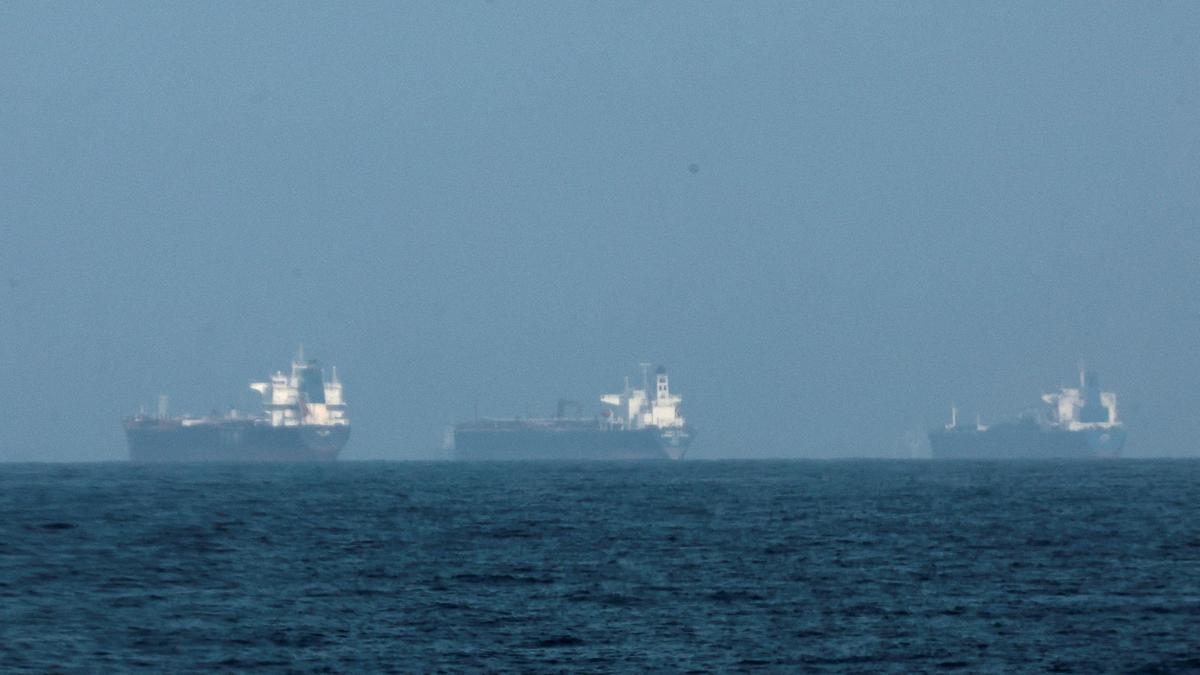
Pakistan is currently executing an emergency pivot in its energy procurement strategy, moving to bypass the Strait of Hormuz by rerouting its critical oil imports through the Saudi Arabian port of Yanbu. The formal request, delivered this week by Petroleum Minister Ali Pervaiz Malik to Saudi Ambassador Nawaf bin Said Al-Malki, represents a desperate attempt to insulate Islamabad from the fallout of a total maritime shutdown in the Persian Gulf. Following recent military strikes on Iran, the Strait of Hormuz—the world’s most vital energy artery—has effectively been rendered a no-go zone for commercial tankers. For Pakistan, which depends on this narrow waterway for roughly 85% of its oil and 65% of its LNG, the closure is not a market fluctuation; it is an existential threat to its industrial and social stability.
The mechanics of this shift rely on the Saudi East-West Crude Oil Pipeline, a 1,200-kilometer infrastructure marvel that connects the oil fields of the Eastern Province to the Red Sea. By shifting its lifting point to Yanbu, Pakistan hopes to tap into Saudi "Arab Light" crude while avoiding the crosshairs of the Persian Gulf conflict. However, this is no simple logistics swap. It is a high-stakes gamble that tests the limits of Saudi capacity and the resilience of a supply chain already under immense pressure from rising insurance premiums and regional volatility.
The Infrastructure Trap
The Strait of Hormuz is barely 21 miles wide at its narrowest point. When it closes, the global energy map is redrawn in hours. Pakistan’s problem is that it has historically built its energy security on the assumption of Gulf stability. The country’s domestic refineries, including PARCO and Byco, are calibrated for specific crude grades—primarily those sourced from Saudi Arabia and the UAE.
While the Saudi East-West pipeline (Petroline) has a design capacity of 5 million barrels per day (mb/d), recent debottlenecking efforts have reportedly pushed that ceiling to 7 mb/d. On paper, this should provide ample room to accommodate Pakistan’s daily requirement of approximately 450,000 barrels. Yet, nameplate capacity rarely reflects reality in a crisis. Historical loading data suggests that Yanbu’s actual export throughput has seldom exceeded 2 mb/d. If other Asian giants like India, Japan, and South Korea also attempt to reroute through Yanbu, Pakistan will find itself at the back of a very long, very expensive line.
Beyond Logistics: The Fiscal Hemorrhage
The logistical shift to the Red Sea does nothing to alleviate the immediate price shock hitting the Pakistani treasury. Even if physical supply is secured through Yanbu, the cost of landing that oil at the port of Karachi is skyrocketing.
- Freight and Insurance: War-risk premiums for vessels operating in the region have surged. Even Red Sea transit is not "safe," given the persistent threat of drone and missile activity around the Bab el-Mandeb strait.
- Currency Pressure: Pakistan is paying for this oil in a currency it does not have. The $1 billion oil financing facility recently pledged by the Saudi Fund for Development provides a temporary cushion, but it is a drop in the bucket compared to an annual import bill that could balloon by billions if Brent remains above $85.
- The Subsidy Dilemma: The government has already signaled that it will pass these costs to the consumer. For a population already reeling from record inflation, a sustained spike in fuel prices is a recipe for civil unrest.
The LNG Blind Spot
Perhaps the most overlooked factor in this crisis is the lack of a "Yanbu equivalent" for liquefied natural gas. Unlike crude oil, which can be piped across the peninsula, Qatar’s massive LNG exports—which account for nearly 90% of the volumes passing through Hormuz—have no alternative route. Pakistan’s power sector is 25% dependent on gas-fired generation. If the Hormuz closure persists, the country cannot simply "reroute" its way out of a blackout.
The Saudi assurance to prioritize oil shipments to Pakistan is a diplomatic win, but it leaves the gas question unanswered. There is no pipeline for LNG, and the floating storage and regasification units (FSRUs) at Port Qasim cannot easily be supplied from the Red Sea without a massive increase in shipping costs and complexity.
The Strategic Mutual Defense Factor
The urgency of the Yanbu request is framed by the Strategic Mutual Defense Agreement (SDMA) signed between Riyadh and Islamabad in late 2025. This pact, which mirrors a NATO-style collective defense commitment, has fundamentally changed the nature of the relationship. Saudi Arabia is no longer just a donor; it is a strategic guarantor.
By facilitating the Yanbu route, Riyadh is fulfilling its side of the bargain, ensuring that its "brotherly ally" doesn't experience a total systemic collapse. However, this dependency is a double-edged sword. Every barrel rerouted through the Red Sea deepens Pakistan's reliance on Saudi goodwill and ties its economic fate even more tightly to the House of Saud's regional maneuvers.
Operational Realities on the Ground
Government officials in Islamabad insist there are 28 days of petrol and diesel in stock. This buffer is designed to prevent immediate panic at the pumps, but it assumes a rapid resolution to the Hormuz disruption that looks increasingly unlikely.
The first vessel destined for Yanbu to lift crude for Pakistan has already been cleared for dispatch. This trial run will determine the viability of the Red Sea route. If the logistics hold and Saudi Arabia prioritizes Pakistan’s "Arab Light" requirements, the country might avoid a fuel famine. But "avoiding famine" is a far cry from economic stability. The extra miles traveled, the higher insurance costs, and the loss of LNG supplies mean that even if the lights stay on, the cost of keeping them on will be staggering.
Pakistan has found a backdoor to the global energy market, but the door is narrow and the path to reach it is through a combat zone.